Sleep Tech research
Sleep Tracker Sensor Types: PPG, Actigraphy, BCG & Thermistors
Compare consumer sleep tracker sensor types: finger vs wrist optical PPG, 3-axis accelerometry, under-mattress pneumatic BCG pads, and skin temperature thermistors.
Written by BenchPicked Editorial Team · Sources checked May 16, 2026
Executive Summary
Bottom line
Consumer sleep trackers estimate sleep stages and recovery by combining four sensor modalities: optical photoplethysmography (PPG for heart rate, HRV, and SpO2), 3-axis accelerometry (movement actigraphy), skin temperature thermistors, or under-mattress pneumatic ballistocardiography (BCG). Finger rings like Oura Ring 4 sample palmar arterioles with less motion artifact than wrist straps, whereas under-mattress pads like Withings Sleep Analyzer eliminate wearable friction entirely.
- Best Suited For
- people comparing consumer sleep tracking without treating a wellness device as medical equipment
- Core Buying Check
- Compare optical PPG (finger vs. wrist), 3-axis accelerometry, under-mattress pneumatic ballistocardiography (BCG), and skin temperature thermistors across accuracy and comfort.
- Key Evaluation Context
- balancing comfort, sensors, charging, subscription cost and data access
Decision matrix
Compare each documented specification against your room, routine, or operating requirements before checking live prices.
| Evaluation Factor | Documented Spec / Status | Buyer Takeaway |
|---|---|---|
| Optical PPG Site (Finger vs. Wrist) | Finger palmar arterioles (Oura/Galaxy Ring) vs. dorsal wrist capillaries (watches/bands) | Choose finger PPG for strong nocturnal pulse waveforms, or wrist wearables when you also want a workout screen. |
| Contactless Pneumatic BCG vs. Wearable Actigraphy | Under-mattress pressure sensor (Withings) vs. on-body 3-axis accelerometer | Choose under-mattress BCG for zero-touch compliance, or on-body sensors if you travel frequently or share a restless mattress. |
| Multi-Sensor Fusion & Power Draw | Continuous SpO2 + temperature + PPG sampling vs. 7-to-14 day battery life | Enabling continuous overnight blood oxygen (SpO2) and breathing tracking significantly increases battery drain on both rings and watches. |
Claim and evidence record
All 1 structured specification claims on this page are cross-referenced against the primary records listed below. Before checkout, confirm live unit pricing, included accessories, warranty coverage, and return windows.
When another option is the better fit
Garmin Venu 3 (subscription-free wrist wearable)
Choose this when you want multi-year sleep staging, HRV status, and nap detection with $0 recurring monthly software fees.
Withings Sleep Analyzer (under-mattress non-wearable pad)
Choose this when wearing any ring or watch overnight disrupts your comfort and you want automatic plug-in bed tracking.
Samsung Galaxy Ring (subscription-free smart ring for Android)
Choose this when you use an Android/Samsung phone and want a titanium smart ring form factor without a $5.99/mo membership.
Product example
Apply these criteria to Herz P1 Smart Ring
A seller-listed smart ring option at $59.99 upfront with no mandatory monthly subscription (unlike $5.99/mo smart-ring memberships), advertised iOS/Android app sync, and up to six days of battery life. Confirm ring sizing, app access, and current purchase terms before ordering.
Read the product researchCompare tested models: Oura Ring 4Garmin Venu 3WHOOP 5.0Withings Sleep Analyzer
Research details
Technical Standard & Sizing Formula: Consumer Sleep Tracker Sensor Modalities and Biometric Signal Physics
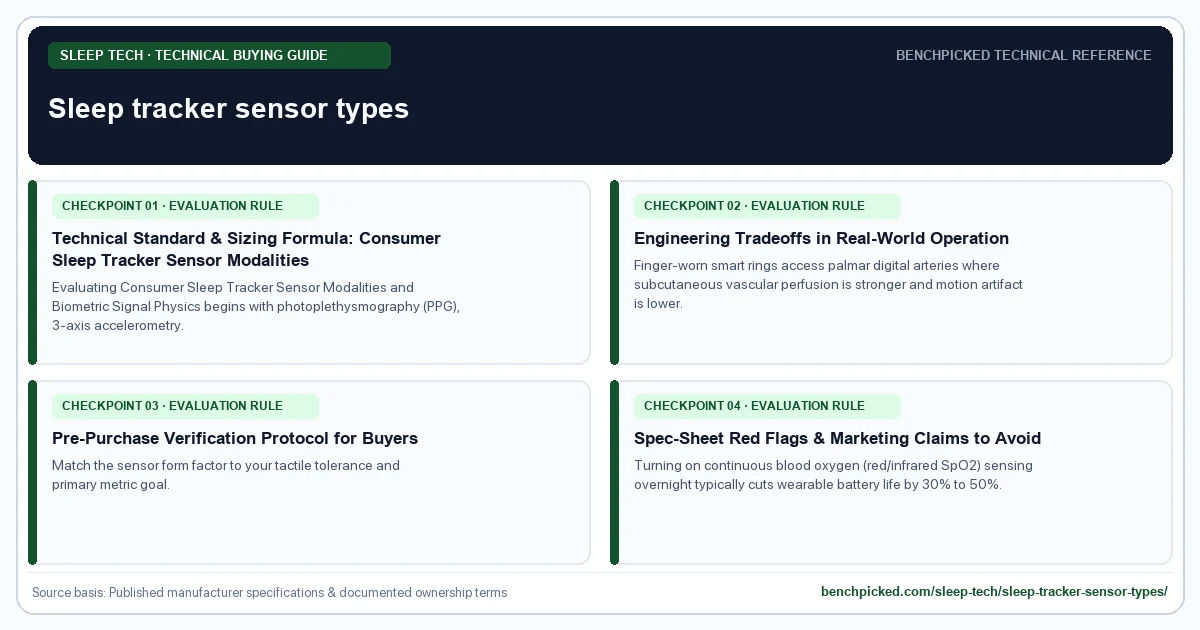
Evaluating Consumer Sleep Tracker Sensor Modalities and Biometric Signal Physics begins with photoplethysmography (PPG), 3-axis accelerometry, ballistocardiography (BCG), and skin temperature thermistors, where accurate comparisons depend on finger vs wrist optical PPG perfusion, movement actigraphy, under-mattress pneumatic BCG, and SpO2 sampling. Consumer sleep trackers do not measure brainwaves directly like clinical polysomnography (EEG); instead, they estimate sleep onset, wake bouts, and sleep architecture by fusing motion (3-axis accelerometer) with autonomic nervous system signals—resting heart rate (RHR), heart rate variability (HRV via RMSSD), respiratory rate, and peripheral skin temperature trends.
Engineering Tradeoffs in Real-World Operation
Finger-worn smart rings access palmar digital arteries where subcutaneous vascular perfusion is stronger and motion artifact is lower than on the dorsal wrist, yielding clean overnight PPG pulse waveforms in a featherweight 3-to-5-gram titanium band. Under-mattress pneumatic pads (ballistocardiography) eliminate body-worn hardware altogether and capture bed entry/exit, heart rate, and breathing vibrations through the mattress, though thick memory-foam toppers or restless bed partners can dampen signal fidelity.
Pre-Purchase Verification Protocol for Buyers
Match the sensor form factor to your tactile tolerance and primary metric goal: choose a smart ring or lightweight strap if you want high-resolution nocturnal HRV and skin temperature trends without wrist bulk, or choose a Wi-Fi under-mattress pad if you refuse to wear or charge anything on your body. Auditing pre-purchase verification protocol for buyers specifically for Sleep tracker sensor types keeps your comparison grounded in verified sleep tracker sensor types documentation rather than generic category assumptions.
Spec-Sheet Red Flags & Marketing Claims to Avoid
Turning on continuous blood oxygen (red/infrared SpO2) sensing overnight typically cuts wearable battery life by 30% to 50%; disable continuous SpO2 once you establish a normal baseline if you prefer longer charging intervals. Remember that consumer optical and pneumatic sensors are wellness trend estimators, not diagnostic medical instruments. Always look for peer-reviewed validation studies against multi-lead polysomnography (PSG) before trusting a brand-new sleep staging algorithm.
Matching Sensor Physics to Real Hardware: Rings, Watches, and Under-Mattress Pads
Instead of relying on generic sensor labels, compare how specific devices deploy each modality: finger rings like Oura Ring 4 and Samsung Galaxy Ring position LEDs against the palmar side of the finger, while wristwatches like Garmin Venu 3 pair dorsal optical HR/Pulse Ox sensors with an on-watch display. If wearing any sensor on your skin disturbs sleep, under-mattress pneumatic pads like Withings Sleep Analyzer measure heart rate, respiratory rate, and body movement through the mattress without batteries to charge.
Full source-attributed specification record (0 fields)
Source notes
- FCC Equipment Authorization Database · Regulatory · Checked May 16, 2026
- Apple Health And Fitness Developer Documentation · Platform Documentation · Checked May 16, 2026
- Android Health Connect Documentation · Platform Documentation · Checked May 16, 2026
Questions
Which specific numbers matter most when evaluating Consumer Sleep Tracker Sensor Modalities and Biometric Signal Physics?
When auditing Consumer Sleep Tracker Sensor Modalities and Biometric Signal Physics, prioritize finger vs wrist optical PPG perfusion, movement actigraphy, under-mattress pneumatic BCG, and SpO2 sampling measured under standardized photoplethysmography (PPG), 3-axis accelerometry, ballistocardiography (BCG), and skin temperature thermistors test conditions. Recording those exact baseline figures for Consumer Sleep Tracker Sensor Modalities and Biometric Signal Physics lets you size hardware accurately without relying on peak promotional claims.
What design tradeoffs affect real-world Consumer Sleep Tracker Sensor Modalities and Biometric Signal Physics performance?
Every product in photoplethysmography (PPG), 3-axis accelerometry, ballistocardiography (BCG), and skin temperature thermistors balances finger vs wrist optical PPG perfusion, movement actigraphy, under-mattress pneumatic BCG, and SpO2 sampling against physical size, acoustic output, and power or consumable draw. Pushing one variable higher in Consumer Sleep Tracker Sensor Modalities and Biometric Signal Physics—such as compact housing or ultra-quiet sleep operation—inevitably requires a tradeoff in peak throughput or runtime.
How should I verify Consumer Sleep Tracker Sensor Modalities and Biometric Signal Physics claims before ordering?
To verify Consumer Sleep Tracker Sensor Modalities and Biometric Signal Physics before checkout, cross-check the manufacturer's engineering spec sheet for finger vs wrist optical PPG perfusion, movement actigraphy, under-mattress pneumatic BCG, and SpO2 sampling and confirm replacement part or subscription pricing. If a listing omits verifiable photoplethysmography (PPG), 3-axis accelerometry, ballistocardiography (BCG), and skin temperature thermistors disclosures for Consumer Sleep Tracker Sensor Modalities and Biometric Signal Physics, treat that missing parameter as a hard operating limit.
How do finger rings, wristwatches, and under-mattress pads compare on sensor accuracy?
Finger rings generally capture cleaner nocturnal PPG pulse waveforms than wristwatches because finger arteries sit closer to the skin with less tendon movement, while under-mattress BCG pads trade portable 24/7 tracking for effortless, plug-in nightly compliance.
Before you buy
Recheck fit and current terms
Compare Herz P1 Smart Ring with the criteria on this page, then confirm the current seller terms.
How BenchPicked separates published facts, analysis, and evidence limits